
The Atrium Mall, Islamabad
Commercial Area, Rawalpindi
Main Boulevard, Swat
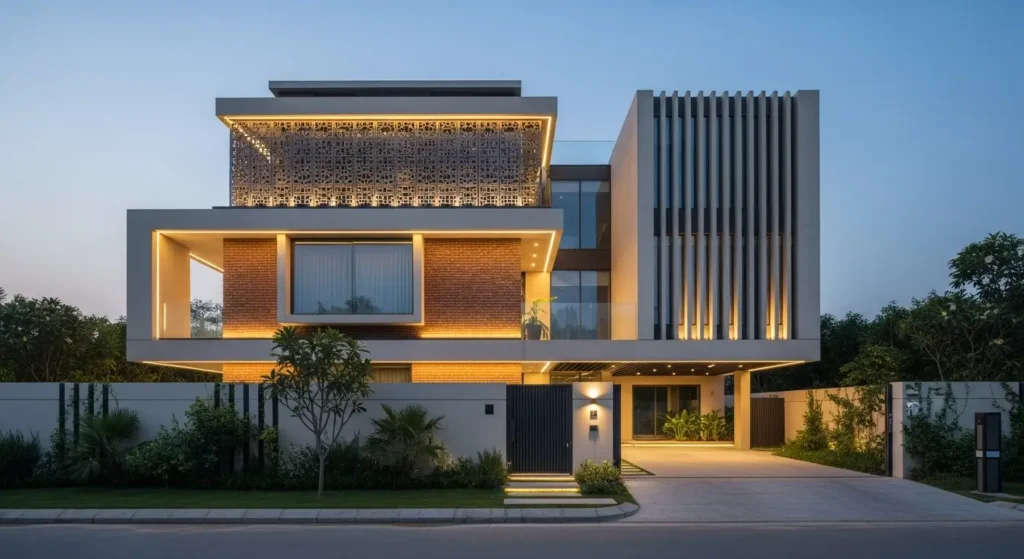 When you build a home here, you’re not just choosing tiles—you’re shaping daily life. Pakistani house architecture blends climate-smart planning, family-centered layouts, and local craft with modern comfort. In this guide, we’ll answer your key questions, show how history shapes today’s homes, and give you practical tips you can actually use—whether you’re sketching a 5 marla plan or refining a 1 kanal elevation.
At its core, Pakistani house architecture is about comfort, culture, and climate.
Most people call it “contemporary architecture.” Practically, that looks like:
The result is a home that looks modern, performs in our climate, and still feels unmistakably local.
Understanding the past helps you design better today.
| Period | Timeframe | Hallmarks | Lasting influence on homes |
|---|---|---|---|
| Indus Valley Civilization | c. 2600–1900 BCE | Gridded streets, baked brick, drainage, courtyards | Courtyard planning, water management, brick culture |
| Buddhist/Gandhara | c. 1st BCE–7th CE | Monasteries, cloisters, axial entries, stone craft | Calm cloister-like courts, clear axes, crafted detail |
| Islamic–Mughal | c. 12th–18th centuries | Gardens, symmetry, domes, iwans, intricate jaalis | Screens for privacy/shade, garden–water integration |
| Colonial to Post-Partition | c. 19th century–present | Verandas, bungalows, Indo-Saracenic, modernism | Veranda culture, hybrid plans, modern materials |
Today’s strongest residential designs remix these ideas—courtyards for climate, screens for privacy, and modern structure for flexibility.
 Famous architecture in Pakistan you can learn from
Borrow principles, not ornament. Your home should solve your site and your life.
Design is local. Start with your climate, then layer style.
Most urban plots are 5 marla, 10 marla, or 1 kanal. Each size calls for a distinct strategy.
| Plot size | Approx. plot area | Typical plan | Smart moves |
|---|---|---|---|
| 5 marla | ~1125–1250 sq ft | 2–3 beds, compact lightwell or courtyard, car porch | Use a skylit stairwell to ventilate; pocket gardens; multipurpose rooms |
| 10 marla | ~2250–2500 sq ft | 3–4 beds, family lounge + drawing, lawn or courtyard | Sliding partitions for flexible zones; service spine for clean MEP |
| 1 kanal | ~4500–5000 sq ft | 4–5 beds, double-height living, larger lawn, terraces | Break massing into volumes; consider servant quarter and storage lofts |
Good flow feels effortless:
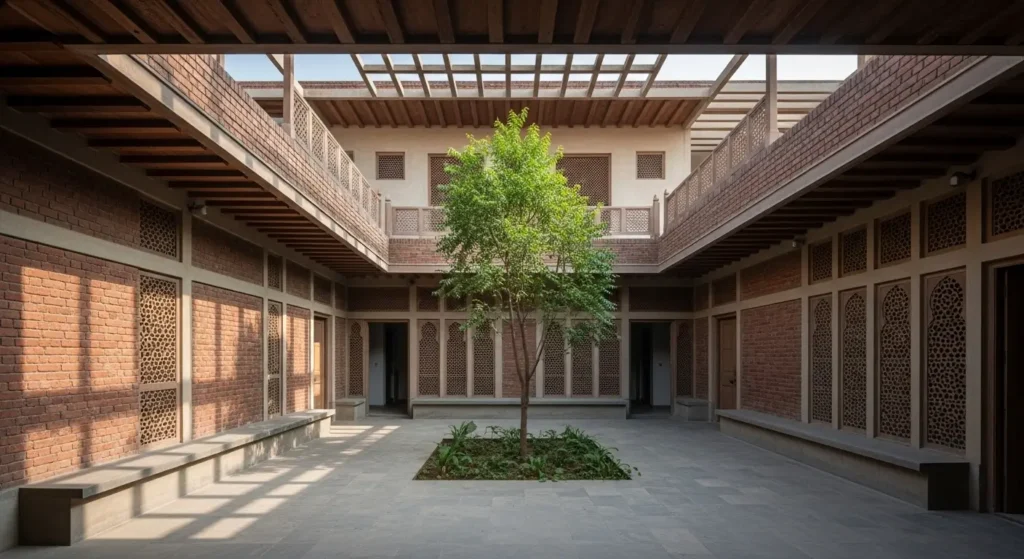 Climate-responsive design: The non-negotiables for Pakistani House Architecture
Orientation Stretch the building along the east–west axis. In Pakistani House Architecture, shade the west side heavily with fins, trees, or secondary skins.
Shading Chajjas, pergolas, and verandas sized to the sun path cut glare and heat. Even a 600–900 mm overhang can help in Pakistani House Architecture.
Insulation Roof insulation usually gives the biggest comfort jump. In Pakistani House Architecture, add a reflective topcoat and proper parapet flashing.
Ventilation In Pakistani House Architecture, cross-ventilation plus a high-level exhaust (roshandan or vented skylight) creates a stack effect to purge hot air.
Thermal mass and night purge Let cool night air flush stored heat from walls and floors. Morning shutters keep it cool longer in Pakistani House Architecture.
Landscaping as cooling In Pakistani House Architecture, plant trees on the west, use grass or groundcover to reduce heat island, and add water features for evaporative cooling.
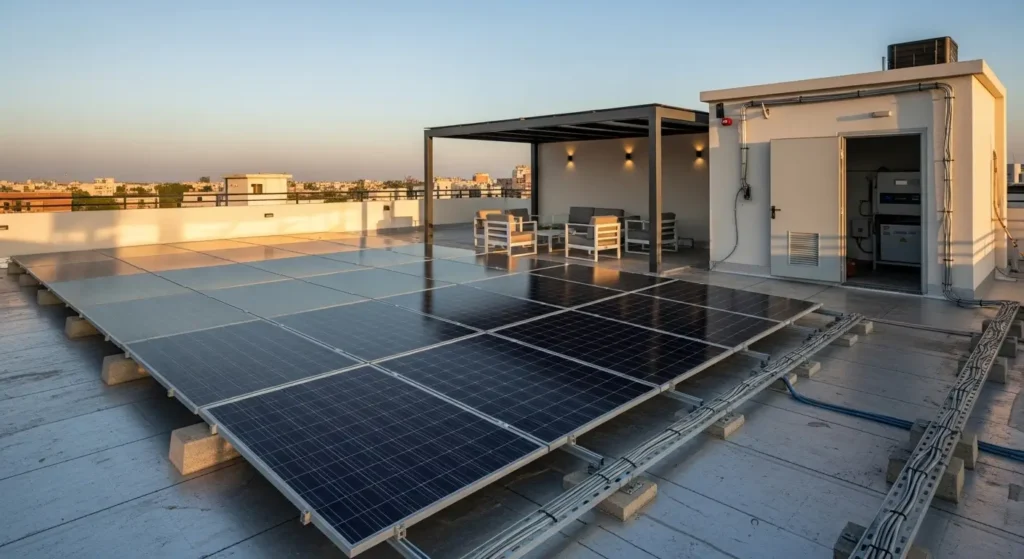
Solar and backup Plan solar PV orientation and keep a service walkway on the roof. In Pakistani House Architecture, place inverters/batteries in shaded, ventilated rooms.
Small passive moves reduce AC use and make living more comfortable in Pakistani House Architecture.
Exposed brick Durable, low maintenance, rich texture. Detail drip edges, sills, and water-shedding profiles to prevent streaks in Pakistani House Architecture.
Fair-faced concrete Modern and strong—use sparingly and balance with warm materials in Pakistani House Architecture.
Painted plaster Economical and flexible. Specify high-quality exterior paint and add drip grooves to control runoff in Pakistani House Architecture.
Screens (jaali/metal/wood) Provide privacy, cut glare, and add depth. Excellent for stairwells and terraces in Pakistani House Architecture.
Timber and stone accents Use at entries, benches, and niches for warmth. Seal timber and detail to avoid water traps in Pakistani House Architecture.
Build for maintenance: oversize gutters, design clean downpipe routes, raise plinths in monsoon-prone areas, and slope paving away from walls in Pakistani House Architecture.
Open but zoned In Pakistani House Architecture, use half-walls, ceiling drops, and screens to define areas without closing them off.
Natural light strategy North skylights and clerestory strips bring in soft light; control south light with shading devices in Pakistani House Architecture.
Flooring Porcelain or terrazzo in high-traffic zones; timber or engineered wood in bedrooms for warmth in Pakistani House Architecture.
Storage Full-height wardrobes, under-stair drawers, and built-in seating keep spaces clean and flexible in Pakistani House Architecture.
Acoustics Rugs, curtains, and acoustic panels tame echo in double-height spaces.
Color and texture Earth tones, soft whites, brick reds, and natural wood feel calm and timeless in Pakistani House Architecture.
Think usability: maintain clear 900–1000 mm circulation paths and use lever handles for accessibility in Pakistani House Architecture.
Spend where it counts long-term:
Understand cost drivers:
Approximate guidance (varies by city, spec, and market conditions):
Treat these as planning ranges, not hard quotes; always get current rates from your builder and quantity surveyor.
Compact 5 marla in Lahore Challenge: tight plot, hot summers. Solution: a sky-lit stairwell doubles as a thermal chimney; small courtyard beside dining; exposed brick façade with deep reveals; roof insulation and reflective coating. Result: cooler afternoons, a brighter interior, and lower reliance on AC in shoulder seasons.
10 marla family home in Islamabad Challenge: winter chills and summer glare. Solution: south-facing sunroom with operable screens; insulated roof and selective double glazing; timber pergola over west terrace; sliding partitions to turn guest room into study. Result: flexible spaces year-round and better comfort with modest energy use.
1 kanal hybrid in Karachi Challenge: humidity, corrosion, and monsoon. Solution: elevated plinth; lime plaster for breathability; stainless/galvanized fittings; large veranda with fans; cross-ventilated bedrooms; service spine keeps ducts and drains organized. Result: easier maintenance and durable performance despite coastal conditions.
These aren’t showpieces—they’re strategies you can adapt in Pakistani House Architecture.
 Common mistakes (and easy fixes)
Small corrections now prevent big regrets later in Pakistani House Architecture.
Entry and drawing room Keep close to the main door to host guests without walking through private spaces. A small foyer with a screen preserves privacy.
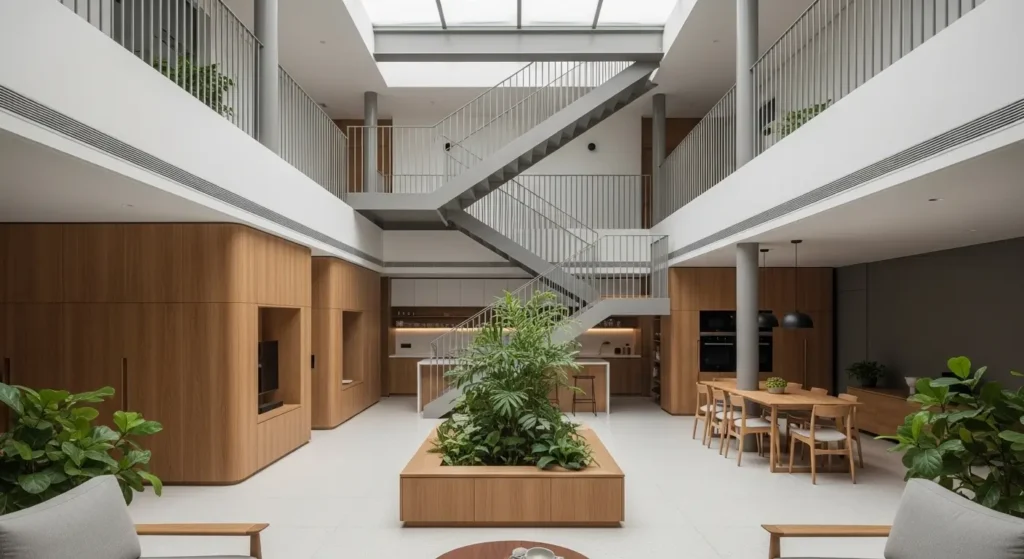
Kitchen–dining–living Treat as one flexible zone with sliding partitions. Add a pocket courtyard or lightwell to bring in air and green.
Bedrooms Place away from street noise; include operable windows on two sides for cross-ventilation when possible.
Stairs A skylit stair can evacuate hot air and bring light to the center of the home.
Bathrooms Prioritize ventilation, anti-slip floors, and easy-to-clean details. Plan niches instead of surface shelves.
Laundry and store Keep on the service spine; provide roof access that’s safe and convenient.
Roof terrace Add shaded seating and plan a safe parapet height. Keep solar panels accessible via service walkway in Pakistani House Architecture.
Print this and tick as you go—it’s simple and effective.
Pakistani house architecture shines when design meets daily life: shaded, airy rooms around a courtyard; deep overhangs; smart ventilation; and materials that age gracefully. If you remember one thing, make it this: design for climate, privacy, and everyday rituals first. Style and beauty will follow. When you shape a home that belongs to its place, it will take care of you in every season.
It’s a climate-smart, family-focused tradition. Expect a central courtyard (angan), deep verandas and chajjas, roshandans for cross-ventilation, thick brick or stone walls for thermal mass, and layered privacy that welcomes guests while protecting family life. Roofs often serve as terraces for evening use.
“Contemporary architecture.” In Pakistan, that means clean lines and open plans blended with vernacular elements like jaali screens, courtyards, shaded terraces, and climate-conscious building envelopes.
Faisal Mosque, Badshahi Mosque, Lahore Fort and Shalimar Gardens, Mohenjo-daro, Shah Jahan Mosque (Thatta), Mazar-e-Quaid, Minar-e-Pakistan, and Alhamra Arts Council are widely recognized. Each offers lessons on proportion, shade, airflow, and material honesty.
Orient the building for shade, add deep chajjas, insulate the roof, and plan cross-ventilation with a high-level exhaust (roshandan or vented skylight). Use thermal mass to buffer heat and ventilate at night to purge it.
Exposed brick with proper detailing, fair-faced concrete used judiciously, stone sills, high-quality exterior paints, and breathable lime plasters in humid zones. Avoid complicated profiles that trap water.
10 marla is a sweet spot for 3–4 bedrooms, a pocket courtyard, and an open-plan family core. Even 5 marla can feel open with a lightwell and careful storage planning.
Pre-run conduits for solar and backup, plan a service spine for clean MEP, design flexible rooms (guest/study), ensure safe roof access, and allow for EV charging and greywater in the future.
Near the family core—dining/living or kitchen—so it’s used daily. A small pocket court can outperform a large, disconnected lawn.
It helps in colder zones and noisy streets. Otherwise, prioritize shading, roof insulation, and airtightness first for better value.
If you’re ready to compare layouts and elevations, explore expert house design ideas for Pakistan to spark your next step: expert house design ideas for Pakistan.
