
The Atrium Mall, Islamabad
Commercial Area, Rawalpindi
Main Boulevard, Swat
 If you’re exploring Swat Valley housing schemes, you’re not alone. Buyers, investors, and overseas Pakistanis love the region’s beauty, improving roads, and growing amenities. In this guide, we’ll help you compare Swat Valley housing schemes, check NOC and approvals, understand prices, and shortlist the right society for your budget and lifestyle. We’ll also answer four key questions buyers ask most often and tie them back to practical choices in Swat Valley housing schemes.
When people say Swat Valley housing schemes, they usually mean residential developments in and around Mingora, Saidu Sharif, Kanju Township, and nearby corridors like Airport Road, Fizagat, and Qamber. These include gated communities, mixed-use projects, and government-led townships. You’ll see plot categories such as 5 marla, 10 marla, and 1 kanal, plus limited apartments and small commercial plots. Think about your goal first: primary home, vacation home, rental income, or long-term land banking.
You’ll find three broad categories in Swat Valley housing schemes:
What to look for in Swat Valley housing schemes:
Below is a quick, buyer-friendly view to help you filter Swat Valley housing schemes:
| Area/Project | Type | Approvals to verify | Access & commute | Typical plot sizes | Best for | Amenities to expect |
|---|---|---|---|---|---|---|
| Mingora (inner pockets) | Urban residential | Municipal NOC, utility connections | Markets, schools, clinics in minutes | 5–10 marla infill | Daily convenience | Shops, basic parks |
| Saidu Sharif (institutional belt) | Planned residential | Layout plan, land title | Hospitals, admin, colleges | 10 marla–1 kanal | Families, staff housing | Quiet streets, services |
| Kanju Township (airport corridor) | Government-planned township | Authority letters, phase-wise maps | Airport Road, improved mobility | 5–10 marla, 1 kanal | End-users, investors | Wider roads, zoning |
| Airport Road gated clusters | Private gated | Developer NOC, utility MoUs | Quick city access | 5–7 marla focus | First-time buyers | Gate, security, parks |
| Scenic peri-urban (Fizagat/Qamber) | Low-density mixed | Revenue records, conversion | Short drive to city | Farmhouses, 1 kanal+ | Vacation homes | Views, space, quiet |
To keep choices realistic, shortlist 2–3 Swat Valley housing schemes from different categories and compare approvals, infrastructure, and livability on one page.
Prices shift with seasonality, infrastructure progress, and phase handovers. In Swat Valley housing schemes, end-user demand favors safe, accessible pockets with confirmed utilities. Investors often target pre-possession phases where development is visible but not fully priced in. Expect total acquisition costs to include token, bayana, transfer, taxes, and development charges if plots are under installation plans. For construction, factor soil tests, retaining works where needed, and reliable water sources. Ask for a phased payment calendar and link payments to clear milestones.
Practical tips to protect your budget:
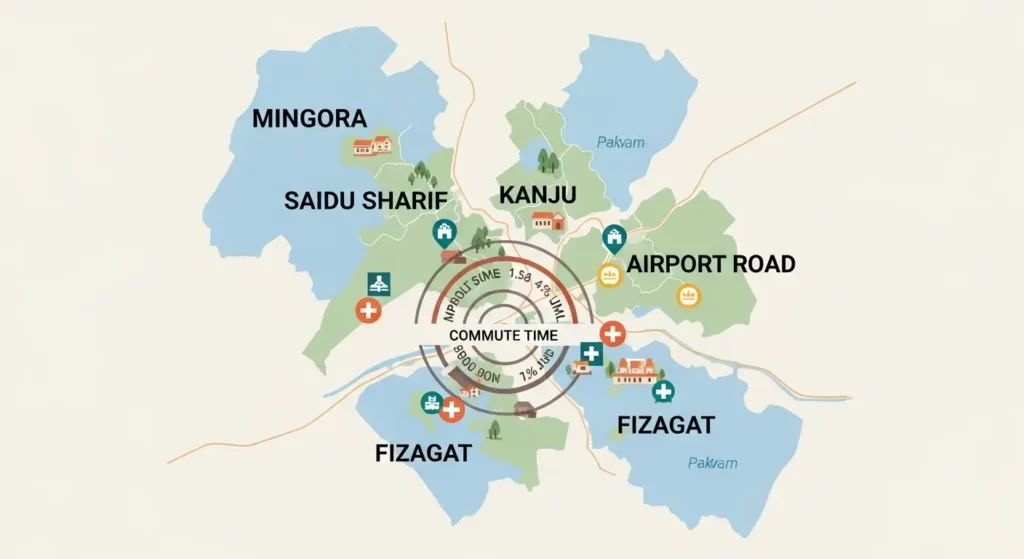 A smart, seven-step buying process
“Best” depends on your city and priorities. Nationally, many buyers praise planned townships with clear zoning, wide roads, and consistent utility delivery. In Swat, Kanju Township is a strong example of a government-planned area near the airport corridor, offering structured blocks and easier access. If you want stability and public oversight, compare Kanju to private Swat Valley housing schemes, and weigh the trade-off between predictable planning and the pace of development.
Premium enclaves in major metros tend to lead on price. Ultra-prime pockets—like exclusive phases in DHA, high-end precincts in Bahria Town, or boutique luxury projects in Islamabad—often command the highest per-unit land and home prices. If you’re benchmarking affordability, use those as a ceiling and assess how far Swat Valley housing schemes are discounted versus big-city luxury. This helps set expectations on capital growth and rental yields without chasing hype.
Historically, the Naya Pakistan Housing approach targeted low-to-middle income citizens, first-time homeowners, and documented income earners with valid CNIC and the ability to service modest mortgages. Programs and thresholds can change, so confirm current criteria with banks and official portals. If a new tranche opens in Khyber Pakhtunkhwa, you can compare subsidies or financing terms to vetted Swat Valley housing schemes, and decide whether to buy a plot or choose ready-built units.
There isn’t a single winner. For families, “best” can mean walkable schools, reliable water, and safe streets. For investors, it’s transparent approvals, visible development, and strong resale. Make a city-by-city shortlist and score each on planning, maintenance, access, and governance. Then apply the same framework to Swat Valley housing schemes so you can pick a society that fits your life now and still works if your plans change.
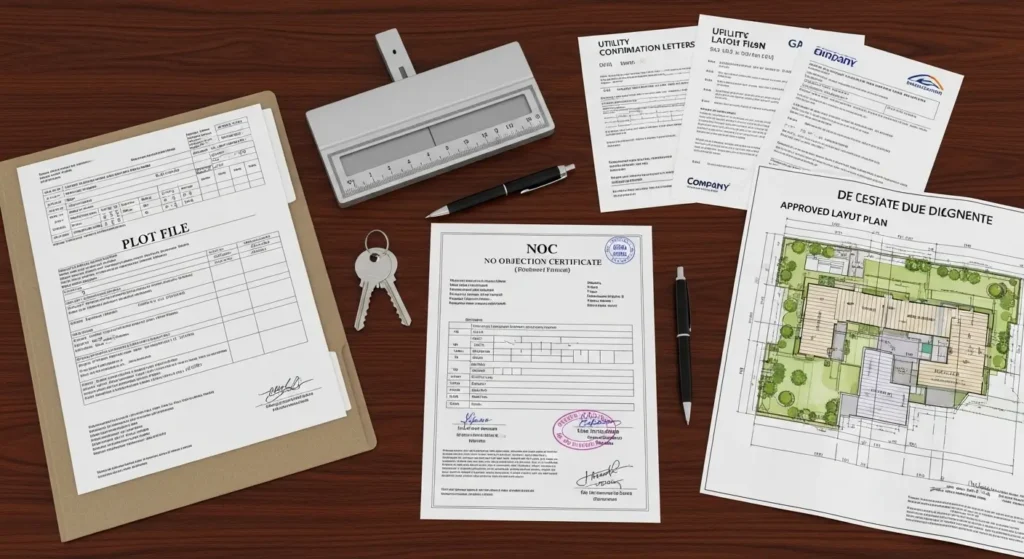 Legal, NOC, and due diligence checklist
Tip: For Swat Valley housing schemes, also check drainage design, culverts, and slope protection—small details that matter in mountain geography.
Once you secure a plot, plan a home that fits climate and terrain. Prioritize passive cooling, cross-ventilation, and sun path. Use soil tests to guide foundations and retaining walls. Choose materials suited for temperature swings and moisture. If you want inspiration, explore the best house design in Pakistan for layout ideas that blend style with function: Best house design in pakistan.
Small wins that improve daily life:
These choices add value in most Swat Valley housing schemes and make homes easier to resell.
Use a 10-point scale and score each item:
Multiply score by weight, total, and rank your final two choices. This removes emotion when comparing Swat Valley housing schemes and makes a decision easier.
Each path can work in Swat Valley housing schemes if you match your goal to on-ground reality.
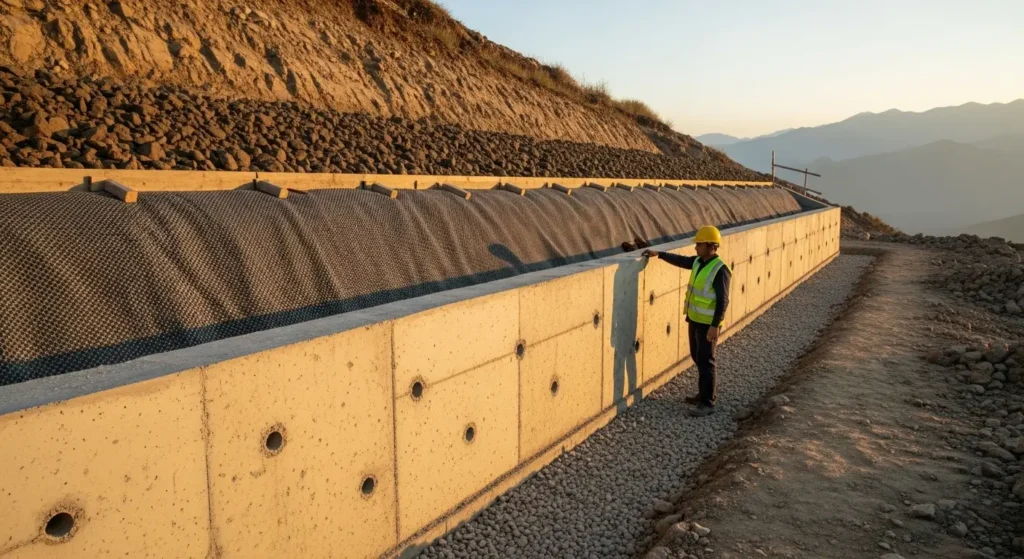
Northern Pakistan’s hills and rivers are stunning—and demanding. If you plan to build in Swat Valley, Hazara, Gilgit-Baltistan, or Murree, flood- and slope-resilient construction should lead every decision. Done right, your home stays dry in the monsoon, stable on slopes, and valuable over time. Done wrong, water and gravity will win. This guide keeps it simple, practical, and tailored to local terrain.
Monsoon bursts, snowmelt, and narrow valleys can turn calm streams into powerful flows. Steep plots, fill soils, and deforestation increase landslide and erosion risk. Building for this reality means fewer repairs, easier approvals, and better resale. Buyers now ask about drainage, retaining walls, and soil tests as much as finishes—especially in Swat and Murree. Think of resilience as insurance built into the structure.
A little site intelligence early saves a lot of concrete later.
Tie these into one plan so water never pauses at your walls.
Hydrostatic pressure—not height—is the silent killer of walls. Always drain.
Strength is design plus inspection: check rebar cover, bar bends, and concrete curing.
Most water problems start at tiny gaps. Flash every penetration and window head.
A clean, maintained small drain beats an oversized but clogged one in every monsoon.
Maintenance turns design intent into performance—without it, systems fail quietly.
Build for the land you have, not the plot you wish you had. With honest site data, disciplined drainage, and thoughtful detailing, your home in northern Pakistan will stand steady through rain, runoff, and time.
There is no single winner for everyone. In Swat, Kanju Township stands out for planned roads and proximity to the airport corridor. Compare it with private Swat Valley housing schemes to balance predictability and pace of delivery.
Ultra-prime enclaves in big cities—select phases of DHA, luxury pockets in Bahria Town, and boutique projects in Islamabad—are often among the most expensive. Use them as a benchmark rather than a target when evaluating Swat Valley housing schemes.
Eligibility has focused on low-to-middle income citizens, first-time buyers, valid CNIC holders, and those who can document income for financing. Always confirm current criteria with banks and official portals before comparing with Swat Valley housing schemes.
“Best” depends on your criteria. Families value schools, water, and safety; investors want approvals, progress, and resale. Apply the same scoring model to Swat Valley housing schemes so you get a choice that fits your life.
Ask for a stamped NOC, approved layout, and written utility confirmations. Cross-check land records and visit the site with a local engineer. In Swat Valley housing schemes, also review drainage and slope protection.
A 5–7 marla plot works for compact homes; 10 marla allows extra living space; 1 kanal suits larger families. In many Swat Valley housing schemes, 10 marla balances budget and comfort.
Do a soil test, plan retaining walls, and ensure proper drainage. Position rooms for light and cross-breeze. These steps pay off across Swat Valley housing schemes.
You don’t need a dozen options—you need two solid, verified choices. Start with approvals and access, then walk the site and run your scoring model. When you compare Swat Valley housing schemes side by side, the right pick becomes obvious. If you plan your home well and build for terrain, you’ll enjoy comfort today and strong resale tomorrow across Swat Valley housing schemes.
